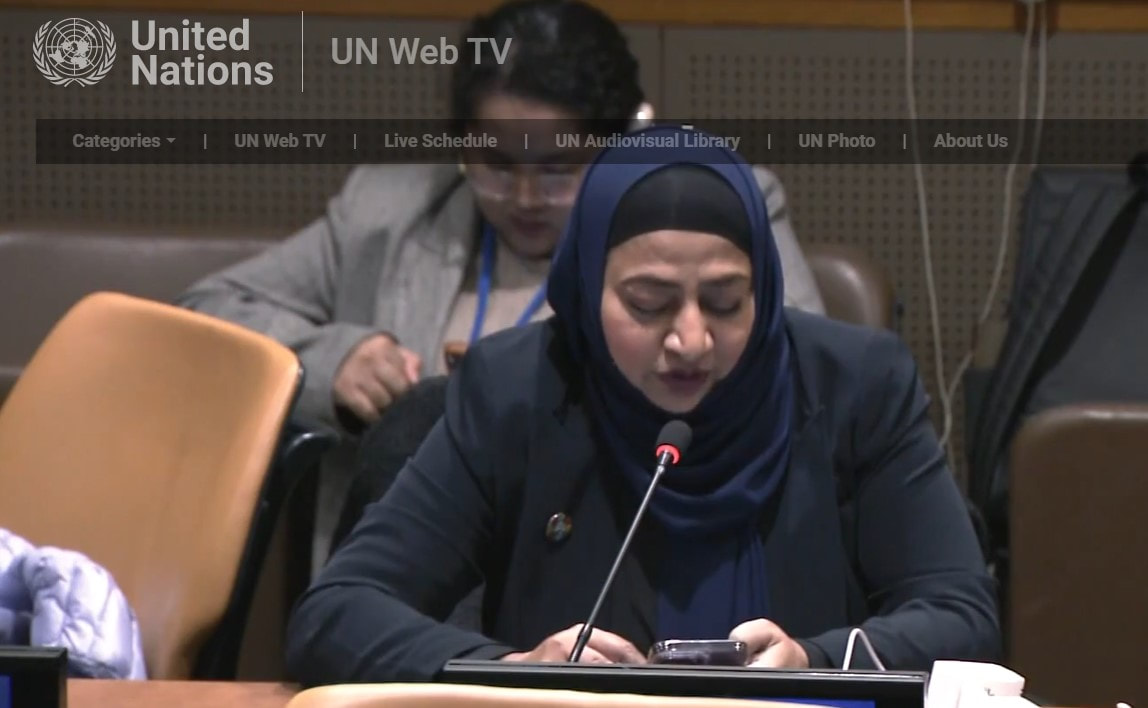
 Justice For All Canada attended the 7th Expert Mechanism on the Right to Development (EMRTD) session in New York on April 3rd, 2023. Campaign Manager Tazeen Hassan contributed to the panel by discussing ongoing military occupation and human rights violations committed by the Indian government in Kashmir, including the impact on the region’s environment and sustainable development. Watch the address here.
My name is Tazeen Hassan and I'm from Justice For All Canada. While this session focused on the right to development including the environment, I would like to draw the attention of this esteemed panel to an important human rights issue related to the environment. The environmentally damaging aspect of the conflict and occupation is a serious human rights issue that policymakers have yet to address. An environmental catastrophe almost equivalent to genocide is affecting 10 to 40 million people in Indian-administered Kashmir and the surrounding region. The glaciers in Indian-administered Kashmir are melting at a twofold faster rate than the glaciers in other parts of the world. This poses a serious threat to the region's water security, and is an existential crisis for the Kashmiri population, 70% of whom rely on agriculture. Regrettably, this environmental disaster is not primarily a result of the natural or anthropogenic activity of the indigenous Kashmiri population, but an inevitable consequence of the deployment of over half a million occupational troops. Since the late 1980s, the deployment of these troops has taken a significant toll on Kashmir's ecology, while the Indian government has allowed unrestricted religious tourism, exacerbating the problem. As a result of these policies, the Kolahoi Glacier, the largest in the region and the primary source for the Jhelum River, has lost 23% of its area in the last three decades. While the Siachen Glacier has lost half of its area since 1984, the destruction of glaciers is no less damaging than a nuclear war, despite the Kashmir region being a bone of contention among three nuclear neighbours. This esteemed panel is well aware of the environmentally disastrous effects of conflict and occupation. Deploying half a million troops requires massive deforestation to make room for their barracks and shooting ranges. Military training involves the extensive use of firearms and their debris, all sources of environmental damage. These activities have been ongoing for over 30 years. According to United Nations and reputable media organizations, the Indian Army has been involved in environmentally damaging policies such as burning shops, homes and even entire villages as punishment for the Kashmiri people's self struggle for self-determination. The Indian Army has also been involved in smuggling timber out of Kashmir. That is also environmentally damaging. Recently, after the revocation of autonomy in 2019, the Indian government has been altering the demography of the Kashmir Valley, which will directly increase anthropogenic activity. Almost 100% of commercial mining projects in the Jhelum River have been awarded to non-Kashmiri businesses from Maharashtra, Gujarat and other areas of India. Besides the destruction of flora and fauna, the massive mining is damaging the walls of the Jhelum River, which has caused flooding in the past. Floods have already caused the disaster of astronomical scale in Kashmir and Pakistan. I urge authorities here at UNHCR and the focus thematic panel to examine the environmental side of human rights development, conduct investigations and collect evidence to document the extent and impact of the environmental genocide in Kashmir. Thank you. 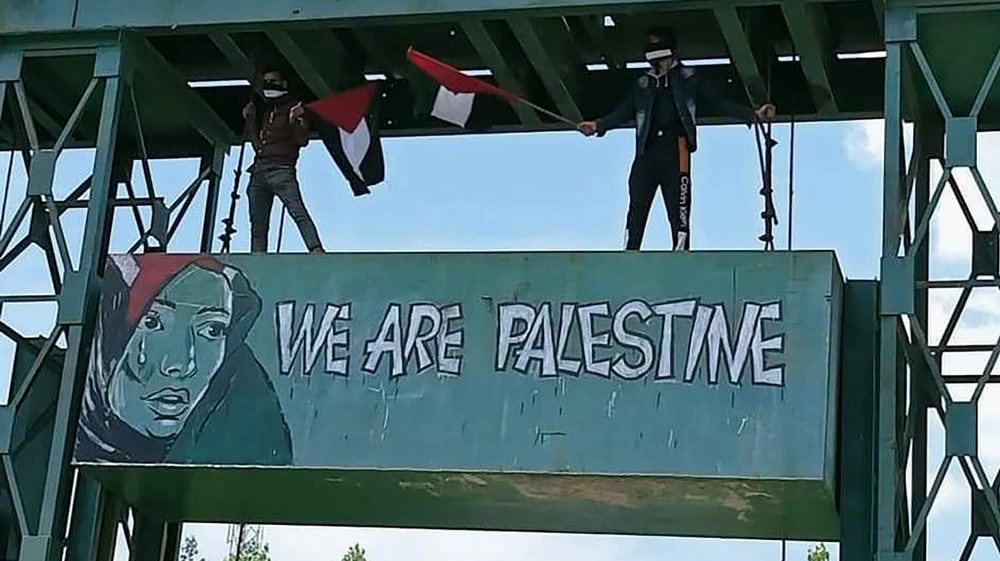 Kashmiri protesters wave Palestine flags above graffiti by artist Mudasir Gul in Indian-administered Kashmir. By Tazeen Hasan
In two far-off lands, on opposite sides of the earth, A story of destruction, of homes and hearth, Kashmir and Palestine, both places we know, Where houses are razed, and families made to go. In Kashmir, the army rolls in with tanks and guns, Bulldozers and explosives, the job has begun, They give no warning, no time to pack, As they shatter the walls, and the roof they hack. In Palestine, it's the Israeli army's might, The bulldozers come, day or night, With no care for the people, who call it home, Their houses are leveled, to the ground they're thrown. Both places are scarred, by these acts of violence, As families are left, with no place to find solace, Their memories, their dreams, their hopes and their fears, Are crushed, shattered, in a flood of tears. The world looks on, with a deafening silence, As the people of Kashmir and Palestine, Are left to bear, the brunt of this hate, Their stories, their pain, they cannot abate. Yet, amidst all this, they rise up again, With a resilience that's hard to contain, Their spirit, their strength, they will not yield, For in their hearts, a flame still burns, unhealed. So, let us stand with them, in their darkest hour, And lift our voices, with all our power, To tell the world, that we will not be still, Till their houses are rebuilt, on the same old hill.  Kolahoi Glacier (Creative Common License) January 25th, 2023
I am a Kashmiri glacier, My name is the Kolahoi glacier, And I am witnessing an environmental genocide, This message is an SOS signal to the world, This matter needs your immediate attention. In the olden days, people used to call me the goddess of light, Kashmiris depend on me and other glaciers for their agricultural needs, We provide water for their crops and fruit orchards, Without us, they will not survive, And we are disappearing, Because of the occupation, Because of the colonization of the Kashmir valley, And this is an environmental genocide, That nobody cares. Experts say my size is reduced by 23 percent, And that too in just three decades, Himalayan glaciers are melting at a faster rate than other regions, And Kashmiri glaciers are melting faster than other Himalayan glaciers, If we continue to melt at this rate, There will be no water for Kashmiris, There will be no food for them, And this is an environmental genocide, That nobody cares. The human activity of one million Indian troops Experts say the reason is human activity, But I want to tell the world, It is not the usual human activity, that causes us to melt at this alarming rate, It is the activity of around one million Indian troops; Which is meant to maintain the occupation of Kashmir valley, With their arrival, I witnessed massive deforestation, To make room for their barracks, They cut forests to build shooting ranges across the valley, Their heavy military vehicles emitted greenhouses gases, For more than thirty years, Their debris and wastes destroyed the climate of this pristine valley. And consequently, other glaciers are disappearing at an alarming rate. If we continue to melt at this rate, There will be no water for Kashmiris, There will be no food for them, And this is an environmental genocide, That nobody cares. And this is not the end! Religious Tourism Despite warnings from the experts, That if they did not regulate religious tourism, Kolahoi glacier will disappear, The Indian government refused to restrict the number of pilgrims, Hindu nationalist groups campaigned to attract a million tourists for Amarnath Yatra, Consequently, We are melting at an alarming rate, If we continue to melt at this rate; There will be no water for Kashmiris, There will be no food for Kashmiris, And this is an environmental genocide, That nobody cares. The occupational forces burned houses and shops, And even the entire village, To collectively punish Kashmiris, Because they demand self-determination, And this practice is damaging the environment, Consequently, We are melting at an alarming rate, If we continue to melt at this rate; There will be no water for Kashmiris. And this is an environmental genocide, That nobody cares. I am a Kashmiri glacier, My name is Kolahoi glacier, And I am witnessing an environmental genocide, This message is an SOS signal to the world, This matter needs your immediate attention. Written by Tazeen Hasan, Campaign Manager for Justice For All Canada. In July and August 2022, Justice For All Canada co-organized back-to-back demonstrations protesting the inhumane persecution of Uighurs and Kashmiris. Although these groups represent different struggles and lived experiences, both minorities share in common grievances related to their security, equality, livelihood and wellbeing. August 31st, 2022 By Saleha Faruque Uighurs and Kashmiris represent Indigenous peoples belonging to native lands in Asia; East Turkestan is home to 12 million Uighurs, whereas 12.5 million Kashmiris live in Jammu and Kashmir. Both regions exist under intense occupation and administration by majoritarian governments. Kashmiris live in Jammu and Kashmir, located in the extreme northwest of India. The Indian state currently occupies two-thirds of this territory. According to Human Rights Watch, India’s ruling nationalist government is responsible for revoking constitutional autonomy granted to Kashmir. East Turkestan has also been colonized, controlled and occupied by China’s government since 1949. Occupying powers in East Turkestan and Kashmir have contributed to severe human rights violations against their minority populations. This includes arbitrary mass arrest, suppression of thought and censorship, illegal settler activities, sexual and gender-based violence, including other crimes punishable under international human rights laws. Kashmir Protest in Mississauga, Ontario Celebration Square is a public space located in the heart of Ontario’s Mississauga city. The venue holds years’ worth of concerts, festivals and community events—an ideal location to amplify voices for Kashmiri rights. The Kashmiri protest was co-organized between Justice For All Canada and Friends of Kashmir Canada. Our respective groups invited students, community leaders, professionals and Kashmiris to gather, share thoughts, and broadcast a strong message in support of the Kashmiri people. The event also drew Kashmiri Canadians from all backgrounds and ages. Because of the successful rally. some of them could finally witness people coming together for the sake of this neglected cause. When it comes to the issue of Kashmiri rights, support is hard to come by. Unfortunately, the pervasive nature of India’s right-wing BJP government makes it difficult for impacted Kashmiris to voice their opinions. Luckily, non-profit organizations like Just Peace Advocates frequently use their platform and expertise to conduct strong advocacy demanding an end to the hidden government-imposed oppression plaguing Kashmir’s population. Uighur Protest in Toronto
It was a warm Sunday afternoon when hundreds of activists, student groups, volunteers, families and Uighur people gathered outside the Chinese consulate in Toronto. Heartfelt testimonies, statements and peaceful chants were delivered by a crowd unified against the ongoing genocide of Uighurs. Anti-genocide signs were held high, and by the day’s end, activists formed emotional connections with one another. Consulate workers entered and exited the building, avoiding eye contact and maintaining stoic expressions throughout. The successful protest was part of a global solidarity movement launched by Stand 4 Uyghurs, an advocacy project of UK-based website Islam21C. In addition to the protest, the #Stand4Uyghurs initiative also included a global khutba campaign in major cities across the UK, Australia, the US and Canada. Justice For All Canada participated by urging hundreds of nationwide Imams and Mosques to dedicate their Friday khutba (lecture) to discussing crimes against humanity inflicting Uighur Muslims under China’s communist government. Canada’s Government is Responsible Justice For All Canada is a human rights and advocacy organization committed to preventing and halting anti-minority Islamophobia, hate crimes, ongoing genocide or genocide incitement in regions like Kashmir, East Turkestan, Palestine, Sri Lanka, Burma and India. As 2022 presents the first non-pandemic summer, activists look forward to continue assembling under shared goals of peace and equality for the world’s most persecuted minorities. 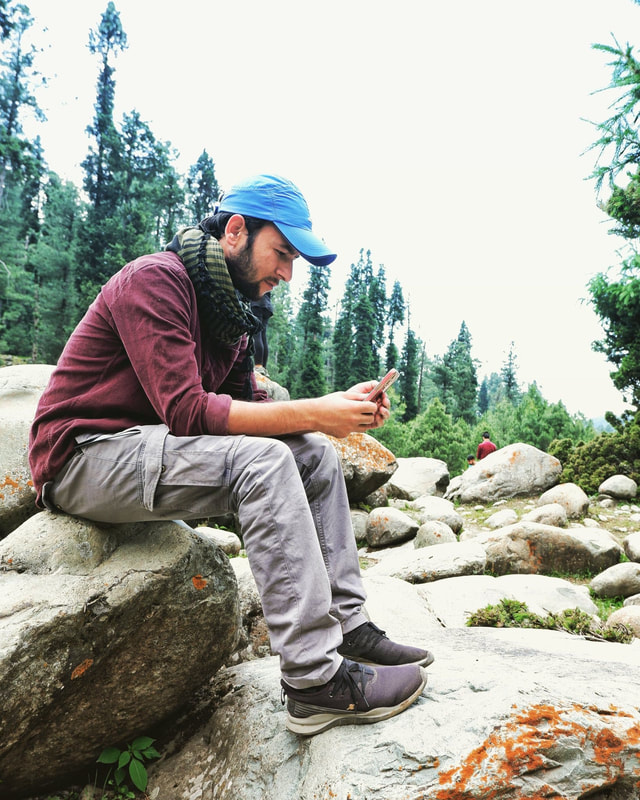 The Indian govt invoked the public Safety Act against the journalist Sajjad Gul, saying he is well educated and may provoke the public against the government on social media, so his case should be non-bailable. Photo courtesy: Sajjad Gul/Twitter Imagine a democracy where posting a local video on social media is an offence. Adding insult to injury is the fact that these charges are non-bailable under a law that Amnesty International long calls a lawless law.
Sajjad Gul, 29, a Master's student in Journalism at the University of Kashmir, and a local reporter at the online media outlet Kashmir Walla, was arrested on January 6 on the accusation that he posted a video of the relatives of a slain militant raising “Anti-India” slogans. According to a recent report by Indian Express, a reputable Indian national media outlet, “Three FIRs were registered against him – two based on complaints by police. Nonetheless, the judicial magistrate's court granted him bail on January 15, but he was booked under the Public Safety Act (PSA) the next day”. FIR, or First Information Report, is a document prepared by Indian police noting serious offences. The PSA has been used since the late 1970s to crush any political resistance against the state. Individuals booked under this law can not apply for bail and can be kept in custody for two years without any judicial procedure or trial. Ironically, after completing the maximum years of detention, the victim of this brutal and lawless act is usually arrested again outside the gate. This vicious cycle continues until the Indian government finally decides the victim is no longer a threat to its colonial project. A.S. Dalut, the former chief of Indian intelligence agencies Research and Analysis Wing (RAW) and Intelligence Bureau (IB), writes in his 2015-memoir “Kashmir: the Vajpayee Years” that they [Indian authorities] used to arrest political prisoners outside the prison gate. According to fair trial standards, prolonged detention of prisoners without trial is arbitrary. The Indian government is a signatory of several international treaties which obligate it to follow international human rights and humanitarian law. The whole Kashmiri leadership, ie: political leaders, journalists, human rights defenders, and lawyers are currently detained under lawless laws like the Unlawful Activities Prevention Act (UAPA), the PSA, or under fabricated charges of “money laundering” and having “links” with cross border terrorist organizations. Since the arrest of Khurram Parvez, the global award-winning human rights defender, the Indian government has intensified its crackdown against Kashmiri civil society to an unprecedented level. The detainee's crime is nothing but their ability to mobilize the people of Kashmir. The Indian government is scared of educated people in Kashmir. As someone commented on Twitter, "being well educated is hazardous in Kashmir."
Written by Tazeen Hasan, a Campaigns Manager of Free Kashmir and #FreeShabirShah, both advocacy projects of Justice For All Canada
This is Imam Omar Sulieman's speech at the Russell Tribunal in Bosnia, taking place in December 2021.
The most influential speeches in history are coincidentally short, comprehensive and compelling. Martin Luther King Junior's 'I have a dream', Nelson Madella's 'I am the first accused', and Ibraham Lincoln's Gettysburg address, all have these distinct qualities.
Imam Omar Sulieman's seven-minute speech at the Russell Tribunal comprises the same attributes. I found his speech succinct yet stimulating and compendious at the same time. Containing all Arostatalian elements of ethos, pathos and logos, Sulieman began his speech with an English translation of his mother's poetry about Bosnia. 'A soul in Saraivo is as precious as a soul in Jenin' He pointed out a few but profoundly important points: While talking about the Kashmir conflict he identifies that our present narratives about history are distorted and often based on body counts and political calculations. The Kashmir conflict should be analyzed keeping in view its historical context focusing on the Kashmiri people. Suleiman emphasizes that we should not be selective while raising our voices against human rights violations. Kashmir is as important as Palestine. He rightly pointed out that it is an irony that India is referred to as the “world's largest democracy”, and Israel is considered “the only democracy” in the Middle East, despite their repression and illegal occupations. Making clear the notion of genocide he said, “genocide is manifested not just through mass killings but heavy milititirization, legislations, censorship to block news locally, surveillance abroad”. I believe he used his seven minutes judicially, delivering the message needed to teach our Ummah (community) how to frame the Kashmir issue in the right context. May Allah reward his efforts and free Kashmiris from Indian aggression. 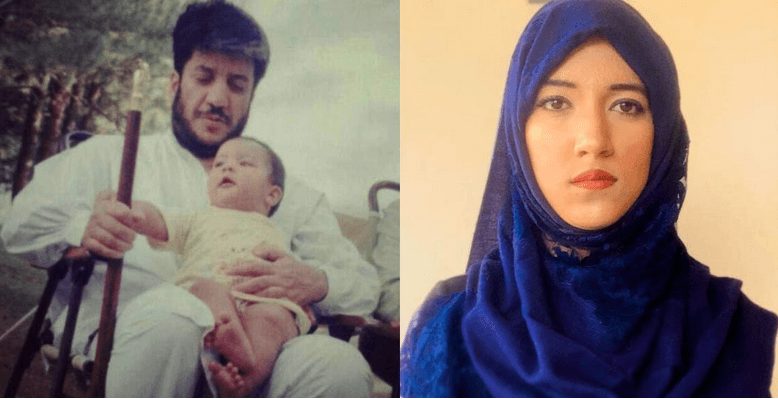 Shah, also called the “Nelson Mandela of Kashmir”, is detained for 34 non-consecutive years, and has never been convicted by any court. After four and a half years of pretrial detention, his court hearing finally began on December 13th, 2021 in the current case. "I just landed at Delhi airport, but they won't let me meet my father, '' said Sehar Shah, the daughter of imprisoned Kashmiri leader Shabir Ahmed Shah.
It was 2 AM in Canada. I had just gotten into bed after finishing a couple of work assignments when I noticed Sehar Shah’s voice messages on Whatsapp. I put on my earphones from the bedside drawers and listened. “I can't visit my father alone in jail." I could feel tears rolling down her face. "They say only one person can visit him inside the jail. And that too only once a month. Where would my mom leave me? Delhi is not a safe place," Sehar was definitely emotional. "It is very disappointing." Months ago, Sehar told me that the kind of treatment she receives from the jail guards aggravates her depression. She was already using heavy doses of antidepressants at that time. In last night's voice messages over WhatsApp, she tells me she takes 11 pills per day. Sehar says that the jail authorities restricted the family visits to one visit per month. The family can't travel every month. "It's very tough both financially and physically," she says. According to Sehar, the Indian Court has just begun discussing her father's case after about four and a half years of pretrial custody. The court case was held on December 10th and December 13th, 2021. While the details are yet to arrive, the next hearing is scheduled for December 21, 2021. Bilquis Shah, a medical doctor and Shabir Shah’s wife, has also been indicted under the same “money laundering” charges for a crime allegedly committed 16 years ago in 2005. Her court hearing coincided with her husband's hearing, so she had to travel to Delhi along with her daughter Sehar, an undergraduate political science student in Srinagar. Sehar last met her father on October 29th, 2021, when she travelled 700 km from Srinagar with her mother. She could only see her father across a blurred and small window and could talk over a microphone for a short time. The family was appalled to see that Shah could not walk independently. Three men were holding and supporting her father. Shah was already suffering from diabetes, kidney and heart ailments, arthritis, and sudden loss of conscience. "He looked pale; three men were holding him for support, and he was even holding a stick in his hand, which he had never used before." Given the crowded conditions in Tihar jail (where Shah is kept), we can't rule out the possibility of a COVID-19 infection ailing him, which could be fatal. In May 2021, senior Kashmiri political leader Ashraf Sehrai, 78, died in Jail, probably due to a COVID-19 infection. It is not clear to the family why Shah could not stand or walk independently. Torture and inhumane conditions are rampant in Indian jails. Kashmiri prisoners are more vulnerable to inhumane conditions because they are considered terrorists and separatists, according to a 2018-UN OHCHR report published on human rights violations in Kashmir. Her father, detained for 34 non-consecutive years, never got convicted by any court. He was arrested for the first time in 1968 at the age of 14 for organizing a protest supporting Kashmiris' right to self-determination. Amnesty International declared him a prisoner of conscience in 1992. The family and Shah's lawyer in Kashmir confirms that he was never convicted of previous detentions in the past 30 years. Currently, he is facing 5th year of pretrial detention. His bail request has been refused multiple times during this period. Shah's advocate told us that he was already on house arrest when they arrested Shah in July 2017. Given Shah's previous arbitrary arrests resulting in 30 years of imprisonment, it's highly plausible that his detainment is once again for political reasons. Sehar tells us her father's life is more important than his release; she requests her father to be released on bail. She also demands access to his medical records so that the family can seek an independent evaluation of his medical conditions. Unfortunately, jail authorities have consistently denied these fundamental rights demanded by Shah's lawyers. Shabir Shah is enduring abysmal living conditions in a six-by-eight cell with no fresh air, inadequate sanitation facilities inside the Tihar jail. These issues present a heightened risk to his health, who already suffers from multiple medical conditions mentioned before. Shah is not allowed to call his family regularly from the prison. While the Court granted bail to the primary accused, Shah faces the 5th year of pretrial detention for an alleged crime committed 16 years ago. Sehar also mentioned that Indian courts and jail authorities never responded to the family's requests to access his medical records and families' requests to allow Shah's nephew and nieces to meet him as visitors. It is very inconvenient to travel to Delhi from Kashmir for Shah's sisters and brothers, who are allowed as visitors. Even Sehar and her mother can't travel every month. So the family made multiple requests to include Shah's nephews and nieces in the visitor list. According to Sehar, the Court did not respond to the request. While arbitrarily detaining Shah, the Indian government violates fundamental human rights and multiple international fair trial standards. According to international Fair trial standards:
The Indian government's indictment of Shabir Shah's wife in an alleged 2005 “money laundering” case is a shameful maneuvering of the justice system. By Tazeen Hasan According to Indian national and Kashmiri media reports, the court has granted bail to Bilquis Shah, wife of Shabir Shah, one of the most revered Kashmiri politicians in Indian-administered Kashmir. Shabir Shah was nominated as the vice president of the Hurriyat Conference, an amalgam of Kashmiri liberation organizations striving for the right of self-determination for the Indigenous population of Kashmir. In September 2020, the prosecution indicted Bilquis Shah in an alleged “money laundering” case occurring in 2005. Bilquis is a respectable medical doctor and serves as an administrator at the local hospital in Kashmir. She is also the sole breadwinner of the family and is bringing up her two daughters as a single mother during the prolonged detentions of Shabir Shah. 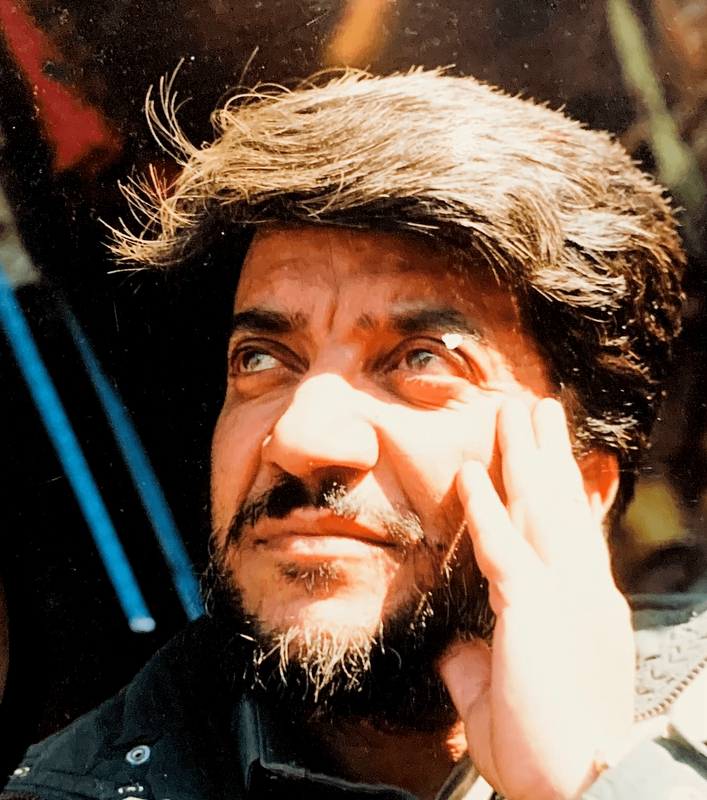 Imprisoned since 2017, Shabir Shah, 67, is facing the fifth year of his pretrial detention for an alleged crime committed in 2005. In 2019, they summoned his daughter to court, who was just five years old at the time of the alleged offence. In 2020, they framed his wife too. Every time a bail plea is filed, the prosecution insists they need more time to collect evidence against Shah. It is also noteworthy that since the alleged crime was committed in 2005, the prosecution has failed to gather evidence against Shah in the last 16 years.
The same is true for 40 other Kashmiri leaders languishing in the worst conditions in jails outside Kashmir, without trial. Most of them are detained under the notorious and controversial Public Safety Act (PSA), which requires no judicial due process. The Indian supreme court have called it (Lawless Laws), but Jammu and Kashmir Police continue to detain political, intellectual, and civil leadership under this law. A.S. Dulat, the former chief of the Research and Analysis Wing (RAW), wrote in his 2015-book Kashmir: “ In the Vajpayee years, immediately after the release of Kashmiri leaders booked under the PSA, they were arrested again outside the prison gates. This is enough evidence indicating that in order to colonize Kashmir, India is using arbitrary detention as a tool”. Indian government officials are never tired of blaming cross-border infiltration for the unrest in Kashmir. Yet, they crush every expression of peaceful political grievance. Furthermore, they use shameful and heinous tactics to harass and intimidate the families. Lately, they have begun to use another controversial law to detain civil leadership called the Unlawful Prevention Act (UAPA), which vaguely defines unlawful activities. Anything from social media posts and stone-pelting, to a private conversation and publishing an article, may be considered an illegal activity. Prolonged Pretrial detention is considered arbitrary according to international human rights law and fair trial standards. The Indian government uses arbitrary detention to subjugate Kashmiri political leadership and pressure them to relinquish the right of self-determination for the Kashmiri people. Now it is targeting and harassing the families to achieve their colonizing goals. In 2019, they summoned his daughter to court, who was just five years old at the time of the alleged crime. In 2020, they framed his wife too. This disgraceful legal maneuvering is enough evidence of the exploitation and harassment of the family as a pressure tactic. Shabir and Bilquis’ daughter Sama Shah, being a top high school student in Kashmir in 2018, was studying in London at the time of the court summoning. These are heinous gimmicks employed by the colonizers to shut up the dissenting voice of the people of Kashmir. There is strong evidence that the charges against Shah are trumped up and political. The fabricated and trumped-up charges against Kashmir’s political leadership are not new. They have been facing arrests and detentions in the past under laws that do not require any due process. The prosecution claimed they found 6.2 million Indian Rupees in possession of alleged “hawala dealer” Aslam Wani. Wani initially pleaded not guilty, yet later, he stated that he was a hawala agent and that the money had to be transferred to Shabir Shah. The prosecution claims that Wani delivered 22.5 million Indian rupees to Shah. Notably, the court granted bail to the alleged primary accused in Wani's case, however, Shah's bail plea was dismissed several times. This seems to be a critical legal contradiction and shows the arbitrariness of the case. The case is also mired with other inconsistencies, as the prosecution could not collect and provide enough evidence, even after 14 years, to solve the unfounded “money laundering” and “terror funding” case against Shabir Shah. The prosecution persuaded the court to extend the pretrial custody of Shabir Shah, because the charges against him are serious, and the prosecution needs more time to collect evidence. While rejecting the bail plea, the judge said that the prosecution could not be blamed for the delay on account of the COVID-19 pandemic, stating 'Ultra posse Nemo obligatur' (No one is obligated beyond what he is able to do). In 2020, the Enforcement Directorate also produced a charge sheet against Bilquis Shah, claiming she received part of funds delivered by Wani. They also probed Bilquis about her house and claimed that she used the money to construct the house. Bilquis responded that she inherited the plot from her parents and took a 20 lac loan from the bank to build the house. Though her bail provides a little comfort to the family, the case proceedings, hearings, and visits to Shabir Shah in Tihar Jail, Delhi, pose immense distress for Bilquis and her daughter Seher Shah, a student herself. According to Seher, jail staff keep a hostile attitude on their visits. The family faces humiliating frisking. A 2019 UN report also confirmed that prisons outside the state are hostile for Kashmiri Muslim detainees, especially separatist leaders. Transferring Kashmiri detainees outside the state makes it harder for family members and legal counsels to meet with them. One former Kashmiri prisoner of Tihar jail reported that jail doctors and medical staff attitudes towards Kashmiri prisoners are worse than the attitudes of guards. In 2010, Indian authorities in Kashmir admitted to Amnesty staff that they have to keep some people "out of circulation." Amnesty International's 2011 report on Lawless Laws says Shabir Shah is out of circulation. Even at the end of 2021, Shah is still out of circulation. Ironically, the Indian government has now decided to keep Kashmiri leadership out of circulation through emergency laws or trumped-up charges. There are many question marks. Are these shameful legal maneuverings are helping India maintain the colonization of Kashmir? |
_heighest_peak_of_Kashmir_Valley.jpg)